Parkinson's Association of SWFL
  • Home
    • Hurricane Resources
  • Resources for Living Well with PD
    • Start Here What You Need to Know about PD >
      • Parkinson Disease in Florida
      • FLORIDA PD REGISTRY
      • 10 things to know about PD
    • Living Well with PD: Start Today
    • PD 101 Free ebook
    • Your Questions About PD Answered in our Blog
    • Community Resources >
      • Community Support Initiatives
      • Movement Disorder Specialists and Neurologists
      • Additional Classes in SWFL for PD
      • Additional SWFL resources for PD
    • Articles & Research on PD >
      • BRAIN PROTIENS MARKERS FOR PARKINSONS DETECTION
      • GUT MICROBIOME EARLY PREDICToR OF PD
      • NEW DBS SETTINGS MAY IMPROVE SPEECH IN PD
      • BRAIN PATTERNS LINKED TO LEVODOPA INDUCED DYSKINESIA
      • BRAIN MODELING TO PREDICT PD PROGRESSION
      • WEARABLE DEVICES FOR TRACKIN PD PROGRESSION
      • BRAIN ACTIVITY PREDICTOR OF PD PROGRESSION
      • DEEP BRAIN STIMULATION PD
      • UNDERSTANDING GAIT IN PD
      • MUSIC MAY IMPROVE GAIT IN PD
      • GOLF COURSE PROXIMITY AND INCREASED RISK FOR PD
      • Social Support Improves PD Symptoms
      • Exercise Improves PD Outcomes
      • Genetic Role in PD
      • Advances in PD
      • Genetic Link to PD
      • Exercise and improved executive Functioning with PD
      • Exercise and Fall Prevention with PD
      • Intimacy and PD
      • spinal cord neuroprosthesis and PD
      • Advance Care Planning and PD
      • Cognitive Impairment Treatment PD
      • Mercury and PD
      • Cognitive Remediation Therapy
      • COVID Vulnerability and PD
      • Postural Instability Severity PD
      • Early Trial for Treatment Shows Promise
      • Biomarker Found
      • Therapeutic Benefits of Dance
      • Ultrasound Therapy for PD
      • Improvisational Theatre for PD
      • PD Detection using AI and Breathing Patterns
      • ALTERNATIVE MOVEMENT EXERCISE
      • NON INVASIVE TREATMENT R-TMS
      • Group Therapy
      • Multidisciplinary Approach to PD
      • VIBRATING GLOVE SHOWES PROMISE
      • Prevalence of PD Underestimated
      • Differences in Men and Women with PD
      • Intermittent Fasting for PD
      • Meditation and Complementary Therapy for PD
      • Cognitive Impairment and PD
      • Aerobic Exercise Alters Brain Function in PD
      • A-Synuclein Biomarker
      • Mediterranean Diet for PD
      • Regular Exercise Improve PD Quality of Life
    • Videos of PD Talks
    • PD Assistive Items
    • Participate in a PD Study or Trial
  • Members Only
  • Programs & Events
    • Sample Calendar of Activities
    • Movement Classes
    • Rhythm In Motion Class
    • Support Groups
    • Speech Exercise
    • Wellness Classes
    • Education Programs
    • Caregiver Programs
    • EARLY ONSET PD
    • Lunch Bunch
    • Events >
      • Bingo for Bags and Baubles >
        • Bingo for Bags and Baubles Sponsorships
        • Bingo for Bags and Baubles Underwriting
      • Mingle & Share a PD Resource Fair
      • Step Up for PD Walk >
        • REGISTER TO WALK - INDIVIDUALS & TEAMS
        • FUNDRAISE FOR THE WALK
        • SUPPORT A WALKER
      • Education Symposium
  • About Us
    • Our Mission
    • Board of Directors
    • Staff
    • News/Press >
      • 2023-24 Board Announced
  • Become a Member
    • Complete a Participation Waiver
  • CONNECT WITH US
    • PD 101 Free Sign Up
    • ENEWS SIGN UP
    • Contact us
  • SUPPORTING OUR MISSION
    • ANNUAL FUND
    • IN HONOR
    • IN MEMORY
    • Planned Giving
  • Home
    • Hurricane Resources
  • Resources for Living Well with PD
    • Start Here What You Need to Know about PD >
      • Parkinson Disease in Florida
      • FLORIDA PD REGISTRY
      • 10 things to know about PD
    • Living Well with PD: Start Today
    • PD 101 Free ebook
    • Your Questions About PD Answered in our Blog
    • Community Resources >
      • Community Support Initiatives
      • Movement Disorder Specialists and Neurologists
      • Additional Classes in SWFL for PD
      • Additional SWFL resources for PD
    • Articles & Research on PD >
      • BRAIN PROTIENS MARKERS FOR PARKINSONS DETECTION
      • GUT MICROBIOME EARLY PREDICToR OF PD
      • NEW DBS SETTINGS MAY IMPROVE SPEECH IN PD
      • BRAIN PATTERNS LINKED TO LEVODOPA INDUCED DYSKINESIA
      • BRAIN MODELING TO PREDICT PD PROGRESSION
      • WEARABLE DEVICES FOR TRACKIN PD PROGRESSION
      • BRAIN ACTIVITY PREDICTOR OF PD PROGRESSION
      • DEEP BRAIN STIMULATION PD
      • UNDERSTANDING GAIT IN PD
      • MUSIC MAY IMPROVE GAIT IN PD
      • GOLF COURSE PROXIMITY AND INCREASED RISK FOR PD
      • Social Support Improves PD Symptoms
      • Exercise Improves PD Outcomes
      • Genetic Role in PD
      • Advances in PD
      • Genetic Link to PD
      • Exercise and improved executive Functioning with PD
      • Exercise and Fall Prevention with PD
      • Intimacy and PD
      • spinal cord neuroprosthesis and PD
      • Advance Care Planning and PD
      • Cognitive Impairment Treatment PD
      • Mercury and PD
      • Cognitive Remediation Therapy
      • COVID Vulnerability and PD
      • Postural Instability Severity PD
      • Early Trial for Treatment Shows Promise
      • Biomarker Found
      • Therapeutic Benefits of Dance
      • Ultrasound Therapy for PD
      • Improvisational Theatre for PD
      • PD Detection using AI and Breathing Patterns
      • ALTERNATIVE MOVEMENT EXERCISE
      • NON INVASIVE TREATMENT R-TMS
      • Group Therapy
      • Multidisciplinary Approach to PD
      • VIBRATING GLOVE SHOWES PROMISE
      • Prevalence of PD Underestimated
      • Differences in Men and Women with PD
      • Intermittent Fasting for PD
      • Meditation and Complementary Therapy for PD
      • Cognitive Impairment and PD
      • Aerobic Exercise Alters Brain Function in PD
      • A-Synuclein Biomarker
      • Mediterranean Diet for PD
      • Regular Exercise Improve PD Quality of Life
    • Videos of PD Talks
    • PD Assistive Items
    • Participate in a PD Study or Trial
  • Members Only
  • Programs & Events
    • Sample Calendar of Activities
    • Movement Classes
    • Rhythm In Motion Class
    • Support Groups
    • Speech Exercise
    • Wellness Classes
    • Education Programs
    • Caregiver Programs
    • EARLY ONSET PD
    • Lunch Bunch
    • Events >
      • Bingo for Bags and Baubles >
        • Bingo for Bags and Baubles Sponsorships
        • Bingo for Bags and Baubles Underwriting
      • Mingle & Share a PD Resource Fair
      • Step Up for PD Walk >
        • REGISTER TO WALK - INDIVIDUALS & TEAMS
        • FUNDRAISE FOR THE WALK
        • SUPPORT A WALKER
      • Education Symposium
  • About Us
    • Our Mission
    • Board of Directors
    • Staff
    • News/Press >
      • 2023-24 Board Announced
  • Become a Member
    • Complete a Participation Waiver
  • CONNECT WITH US
    • PD 101 Free Sign Up
    • ENEWS SIGN UP
    • Contact us
  • SUPPORTING OUR MISSION
    • ANNUAL FUND
    • IN HONOR
    • IN MEMORY
    • Planned Giving

Parkinson's Association 
SWFL Blog

All blog posts are for general information only and not medical advice. Always consult your doctor about your health and treatment decisions.

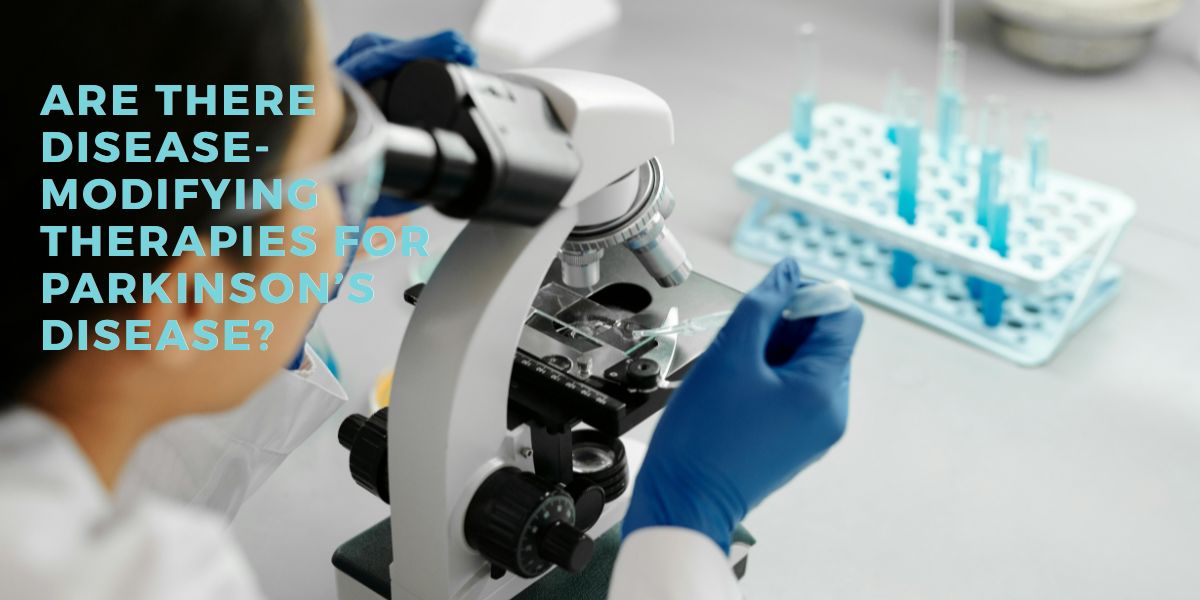
Are There Disease-Modifying Therapies for Parkinson’s Disease?

9/20/2026

0 Comments

 
Picture
If you have Parkinson’s disease, you may wonder whether there is a treatment that can do more than control symptoms—one that could actually slow or stop the disease from progressing. As of 2026, there are no approved disease-modifying therapies proven to slow, stop, or reverse Parkinson’s disease. However, researchers are actively studying treatments that target the underlying biology of Parkinson’s, and several promising approaches are being tested in clinical trials.

So what is happening behind the scenes—and could a disease-modifying treatment finally be getting closer? The Parkinson’s research pipeline has never been more active, and understanding what is being studied can help you make informed decisions about your care.
What Is a Disease-Modifying Therapy?
A disease-modifying therapy is a treatment designed to change the underlying disease process rather than simply manage its symptoms.
Most current Parkinson’s treatments—including medications that increase or replace dopamine activity—are designed to improve movement and other symptoms. They can make a significant difference in daily life, but they do not currently stop the underlying progression of Parkinson’s. 

A disease-modifying treatment would ideally protect vulnerable brain cells, slow their damage or loss, or otherwise interfere with the biological processes contributing to Parkinson’s.
Researchers are studying several different ways to accomplish this.
​
Are Any Disease-Modifying Treatments Approved for Parkinson’s?
No. As of September 2026, there is no approved therapy that has been demonstrated to modify the underlying progression of Parkinson’s disease.
That does not mean researchers have given up. In fact, the Parkinson’s Foundation reported in September 2026 that more studies than ever are exploring disease-modifying therapies, including approaches intended to slow, stop, or potentially reverse aspects of the disease process. 
​
This distinction is important because a medication can improve symptoms without actually changing the course of the disease.
Picture
What Disease-Modifying Treatments Are Being Studied?
Researchers are investigating several potential approaches.
Targeting Parkinson’s-Related Proteins
One major area of research focuses on alpha-synuclein, a protein associated with Parkinson’s. Scientists are investigating whether reducing, clearing, or preventing harmful forms of alpha-synuclein could protect brain cells.
Targeting Genetic Causes
Some people with Parkinson’s have genetic changes associated with increased risk or specific biological pathways.
Researchers are studying treatments aimed at pathways involving genes such as LRRK2 and GBA1. For example, LRRK2-targeted therapies are being investigated with the goal of reducing activity in a pathway that may contribute to damage to dopamine-producing neurons. 
Protecting or Replacing Brain Cells
Another approach involves protecting vulnerable dopamine-producing neurons or replacing cells that have been lost.
Cell replacement therapies and other regenerative approaches are being studied, although these remain experimental and are not currently standard Parkinson’s treatment. The Parkinson’s Foundation highlighted cell replacement and disease-modifying trials as active areas of research in its September 2026 expert briefing. 
Picture
Targeting Inflammation and Other Biological Processes
Researchers are also studying inflammation, mitochondrial dysfunction, lysosomal function, and other processes that may contribute to Parkinson’s progression.
The goal is to determine whether targeting these mechanisms can protect neurons and ultimately change the course of the disease.

What About Ambroxol and Other Experimental Drugs?
You may have heard about ambroxol, a medication originally used for respiratory conditions. It is being investigated because researchers believe it may influence GCase, a protein pathway associated with Parkinson’s.
A Phase 3 trial of ambroxol began recruiting in 2025 to investigate whether it can slow Parkinson’s progression. However, it remains an investigational treatment—not an approved disease-modifying therapy. 
Other experimental therapies are also being studied, including treatments targeting LRRK2, inflammation, mitochondrial function, and other pathways.

Should Someone With Parkinson’s Consider a Clinical Trial?
Clinical trials are one way researchers determine whether an experimental treatment is actually safe and effective.
Some Parkinson’s trials specifically investigate potential disease-modifying therapies. Others study symptom treatments, devices, exercise programs, or rehabilitation approaches.
Importantly, participating in a clinical trial does not necessarily mean giving up standard Parkinson’s care. Many trials allow participants to continue their usual treatments. Eligibility depends on the particular study, including factors such as age, diagnosis, symptoms, genetics, medication history, and disease stage. 
​
Anyone considering a clinical trial should discuss the potential benefits, risks, requirements, and alternatives with their healthcare team.
Picture
Questions People Ask About Disease-Modifying Parkinson’s Treatments
Can Parkinson’s be cured?
There is currently no cure for Parkinson’s disease. Existing treatments can manage symptoms and improve daily function, but they do not currently stop the disease from progressing. 
Can medication slow Parkinson’s progression?
Current approved Parkinson’s medications are primarily used to manage symptoms. They have not been proven to slow the underlying progression of Parkinson’s disease.
Is there hope for a disease-modifying treatment?
Yes. Researchers are investigating numerous potential approaches, and the field is advancing. However, experimental results must be carefully evaluated through clinical trials before a treatment can be considered proven and approved.
Should I ask my doctor about clinical trials?
Yes. If you are interested in research, ask your neurologist or movement disorder specialist whether there are clinical trials for which you might qualify.
What Can I Do While Researchers Search for Disease Modification?
Although there is not yet a disease-modifying medication, there are many things people with Parkinson’s can do to protect their health and maintain function.
Following an individualized treatment plan, exercising regularly, addressing sleep and mood problems, participating in physical, occupational, or speech therapy when appropriate, maintaining social connections, and working with a Parkinson’s-informed healthcare team can all be important parts of living well with PD.
​
Conclusion
The search for a disease-modifying Parkinson’s treatment is one of the most important areas of Parkinson’s research today. There is not yet an approved therapy proven to slow, stop, or reverse Parkinson’s disease, but researchers are studying multiple promising approaches.
For people living with Parkinson’s and their families, staying informed can help turn uncertainty into understanding. Talk with your healthcare team about current treatment options, research developments, and whether participating in a clinical trial might be appropriate for you.
Picture
Why Support Matters
A diagnosis of any form of Parkinson’s can feel overwhelming. But with the right support and resources, individuals can maintain independence, quality of life, and emotional well-being.
For resources, referrals, and support in navigating Parkinson’s and related conditions, contact the Parkinson’s Association of Southwest Florida at www.paswfl.org or call 239-417-3465.
For over 25 years, PASWFL has provided free, high-quality services and programs to individuals and families touched by Parkinson’s disease in Southwest Florida. Their goal is simple: help people live well with PD, regardless of where they are in their journey.

Each week, PASWFL offers more than 25 free programs and support groups, including:
  • Wellness and fitness classes
  • Speech Exercise classes
  • Educational seminars
  • Support for care partners
  • Support groups
There are no fees to become a member, and PASWFL welcomes anyone touched by PD.

Take the First Step Toward Living Well
If you suspect early Parkinson’s or have been recently diagnosed, you don’t have to face it alone.
👉 Click here to sign up for the PASWFL newsletter: https://parkinsonassociationswfl.org/signup-enews.html
👉 Click here to become a member—it’s free and confidential: https://parkinsonassociationswfl.org/signup.html
To learn more, visit www.paswfl.org and discover the power of support, education, and community.
0 Comments

Your comment will be posted after it is approved.


Leave a Reply.

    Author

    Write something about yourself. No need to be fancy, just an overview.

    Archives

    September 2026
    August 2026
    July 2026
    June 2026
    May 2026
    April 2026
    March 2026
    February 2026
    January 2026
    December 2025
    November 2025
    October 2025
    September 2025
    August 2025
    July 2025
    June 2025
    May 2025
    April 2025
    March 2025
    November 2024
    September 2024
    August 2022
    August 2021
    January 2021
    July 2020
    June 2020
    May 2020

    Categories

    All
    How-to-diagnose-parkinsons-disease
    How-to-manage-parkinsons-disease
    What Is Parkinson's Disease

    RSS Feed

Parkinson's Association of Southwest Florida 
2575 Northbrooke Plaza Drive
Suite#301, Naples, FL 34119
239-417-3465

[email protected]
​

Hours of Operation:
Monday - Thursday 9 am - 5 pm
Friday 9 am - 3 pm
Has the Parkinson's Association of Southwest Florida impacted your life? Don't forget to leave us a review on Facebook or on Google. 

PASWFL Office

Terms of Use and Privacy Policy

Become a Member

Picture