Parkinson's Association of SWFL
  • Home
    • Hurricane Resources
    • 2026 PASWFL MARKETING STATS
  • Resources for Living Well with PD
    • Start Here What You Need to Know about PD >
      • Parkinson Disease in Florida
      • FLORIDA PD REGISTRY
      • 10 things to know about PD
    • Living Well with PD: Start Today
    • PD 101 Free ebook
    • PD ESSENTIAL 5 EBOOK
    • Your Questions About PD Answered in our Blog
    • Community Resources >
      • Community Support Initiatives
      • Movement Disorder Specialists and Neurologists
      • Additional Classes in SWFL for PD
      • Additional SWFL resources for PD
    • Articles & Research on PD >
      • RED LIGHT THERAPY SHOWS PROMISE FOR PD
      • BRAIN PROTIENS MARKERS FOR PARKINSONS DETECTION
      • GUT MICROBIOME EARLY PREDICToR OF PD
      • NEW DBS SETTINGS MAY IMPROVE SPEECH IN PD
      • BRAIN PATTERNS LINKED TO LEVODOPA INDUCED DYSKINESIA
      • BRAIN MODELING TO PREDICT PD PROGRESSION
      • WEARABLE DEVICES FOR TRACKIN PD PROGRESSION
      • BRAIN ACTIVITY PREDICTOR OF PD PROGRESSION
      • DEEP BRAIN STIMULATION PD
      • UNDERSTANDING GAIT IN PD
      • MUSIC MAY IMPROVE GAIT IN PD
      • GOLF COURSE PROXIMITY AND INCREASED RISK FOR PD
      • Social Support Improves PD Symptoms
      • Exercise Improves PD Outcomes
      • Genetic Role in PD
      • Advances in PD
      • Genetic Link to PD
      • Exercise and improved executive Functioning with PD
      • Exercise and Fall Prevention with PD
      • Intimacy and PD
      • spinal cord neuroprosthesis and PD
      • Advance Care Planning and PD
      • Cognitive Impairment Treatment PD
      • Mercury and PD
      • Cognitive Remediation Therapy
      • COVID Vulnerability and PD
      • Postural Instability Severity PD
      • Early Trial for Treatment Shows Promise
      • Biomarker Found
      • Therapeutic Benefits of Dance
      • Ultrasound Therapy for PD
      • Improvisational Theatre for PD
      • PD Detection using AI and Breathing Patterns
      • ALTERNATIVE MOVEMENT EXERCISE
      • NON INVASIVE TREATMENT R-TMS
      • Group Therapy
      • Multidisciplinary Approach to PD
      • VIBRATING GLOVE SHOWES PROMISE
      • Prevalence of PD Underestimated
      • Differences in Men and Women with PD
      • Intermittent Fasting for PD
      • Meditation and Complementary Therapy for PD
      • Cognitive Impairment and PD
      • Aerobic Exercise Alters Brain Function in PD
      • A-Synuclein Biomarker
      • Mediterranean Diet for PD
      • Regular Exercise Improve PD Quality of Life
    • Videos of PD Talks
    • PD Assistive Items
    • Participate in a PD Study or Trial
  • Members Only
  • Programs & Events
    • Sample Calendar of Activities
    • Movement Classes
    • Rhythm In Motion Class
    • Support Groups
    • Speech Exercise
    • Wellness Classes
    • Education Programs
    • Caregiver Programs
    • EARLY ONSET PD
    • Lunch Bunch
    • Events >
      • Mingle & Share a PD Resource Fair
      • Step Up for PD Walk >
        • REGISTER TO WALK - INDIVIDUALS & TEAMS
        • FUNDRAISE FOR THE WALK
        • SUPPORT A WALKER
      • Bingo for Bags and Baubles >
        • Bingo for Bags and Baubles Sponsorships
        • Bingo for Bags and Baubles Underwriting
        • Bingo for Bags and Baubles Silent Auction
      • Education Symposium
  • About Us
    • Our Mission
    • Board of Directors
    • Staff
    • News/Press >
      • 2023-24 Board Announced
  • Become a Member
    • Complete a Participation Waiver
  • CONNECT WITH US
    • PD 101 Free Sign Up
    • ENEWS SIGN UP
    • Contact us
  • SUPPORTING OUR MISSION
    • YEAR END GIVING
    • GIVING TUESDAY
    • ANNUAL FUND
    • IN HONOR
    • IN MEMORY

Parkinson's Association 
SWFL Blog

All blog posts are for general information only and not medical advice. Always consult your doctor about your health and treatment decisions.

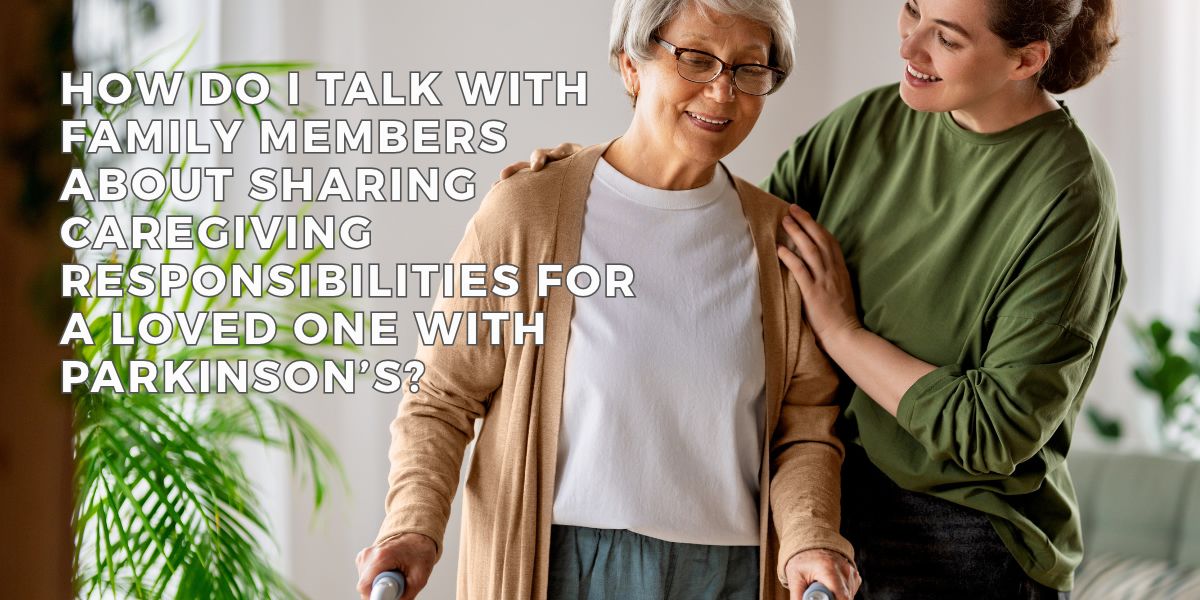
How Do I Talk With Family Members About Sharing Caregiving Responsibilities for a Loved One With Parkinson’s?

11/28/2026

0 Comments

 
Picture
When someone you love is diagnosed with Parkinson’s disease, caregiving can gradually become a family responsibility. But what happens when one person ends up doing most of the work? Between appointments, medications, daily activities, emotional support, and changing needs, caregiving can become overwhelming. Learning how to talk with family members about sharing caregiving responsibilities can help protect relationships, reduce stress, and ensure your loved one receives the support they need.
Here's something every family should remember: Caregiving shouldn't automatically fall on the person who lives closest, has the most flexible schedule, or simply has a hard time saying no. Sharing the responsibility doesn't mean everyone has to do the same things. It means everyone has an opportunity to contribute in ways that make a meaningful difference.
Why Is Sharing Parkinson’s Caregiving Responsibilities Important?
Parkinson’s is a progressive neurological condition, meaning symptoms and care needs can change over time. Your loved one may initially need occasional assistance but eventually require more help with mobility, medications, appointments, household activities, or personal care.
When one family member assumes most of these responsibilities, physical exhaustion, emotional stress, resentment, and caregiver burnout can develop.
Sharing responsibilities can:
  • Reduce stress and prevent caregiver burnout.
  • Provide more consistent support for your loved one.
  • Strengthen family relationships through cooperation.
  • Give caregivers time for their own health and personal needs.
  • Help families prepare for changing care requirements.
Most importantly, it allows your loved one to maintain as much independence and dignity as possible.

​How Do You Start a Conversation About Sharing Caregiving?
Talking about caregiving responsibilities can be uncomfortable, particularly if family members have different opinions about what is needed or who should help.
Rather than waiting until you're overwhelmed, initiate the conversation early.
Choose a time when everyone can talk without distractions or immediate pressure. Explain what caregiving currently involves and where additional help is needed.
Try using statements such as:
  • "I want to make sure Mom gets the support she needs, but I'm finding it difficult to manage everything alone."
  • "Can we talk about how everyone could contribute?"
  • "I don't expect everyone to do the same things, but I do need us to work together."
  • "Let's figure out a plan that works for everyone."
Focus on finding solutions rather than assigning blame.
Picture
What Caregiving Responsibilities Can Family Members Share?
Not everyone has the same availability, abilities, or proximity to their loved one. Fortunately, caregiving involves much more than providing hands-on assistance.
Consider dividing responsibilities into specific categories:
Medical appointments
  • Schedule appointments.
  • Provide transportation.
  • Attend appointments and take notes.
  • Communicate important updates to other family members.
Medication coordination
  • Help arrange prescription refills.
  • Set up medication reminders.
  • Coordinate questions with healthcare providers.
Household support
  • Grocery shopping.
  • Meal preparation.
  • Cleaning and laundry.
  • Arranging home maintenance.
Daily assistance
  • Help with errands.
  • Provide assistance with mobility or personal care when needed.
  • Offer companionship and regular visits.
Administrative responsibilities
  • Organize insurance paperwork.
  • Help manage bills and appointments.
  • Research community resources and caregiving services.
Respite care
  • Give the primary caregiver scheduled time off.
  • Take over responsibilities for an afternoon or weekend.
  • Arrange additional caregiving assistance when needed.
Family members who live far away can still contribute by coordinating appointments, managing paperwork, arranging deliveries, researching services, or helping with expenses when appropriate.
The goal is participation, not perfection.
Picture
What If Family Members Don't Want to Help?
This can be one of the most painful parts of caregiving.
Sometimes relatives don't understand how demanding Parkinson’s caregiving can become. Others may feel uncomfortable, overwhelmed, or uncertain about what to do.
Instead of making general requests like "I need more help," try asking for something specific.
For example:
  • "Could you take Dad to his Thursday appointment?"
  • "Would you be able to handle grocery shopping twice a month?"
  • "Can you spend Saturday afternoon with Mom so I can have some time off?"
Specific requests make it easier for family members to understand what is needed.
If someone consistently declines, avoid spending all your energy trying to convince them. Consider other relatives, community resources, support organizations, and professional caregiving services.
You cannot control everyone's participation, but you can establish boundaries around what you are able to provide.

How Can Families Create a Parkinson’s Caregiving Plan?
A written caregiving plan helps everyone understand their responsibilities and reduces confusion.
Start with a family meeting and discuss:
  1. Your loved one's current needs and preferences.
  2. Which responsibilities need to be covered daily, weekly, and monthly.
  3. Who is willing and able to take on each responsibility.
  4. How the family will communicate updates and changes.
  5. What backup arrangements are available when someone cannot help.
  6. When the plan should be reviewed as Parkinson’s symptoms change.
Whenever possible, include your loved one in these discussions. Their preferences, independence, and personal goals should remain central to every decision.
Consider using a shared calendar or group communication system to coordinate appointments, medications, and caregiving schedules.
​
Why Caregivers Need Support Too
Care partners often become so focused on their loved one's needs that they neglect their own physical and emotional well-being.
However, taking care of yourself isn't selfish. It's an important part of being able to provide ongoing support.
Make time for rest, exercise, social connections, and activities you enjoy. Ask for help before reaching a breaking point, and remember that support groups can provide a place to share experiences with people who understand.
You don't have to manage every challenge alone.
Picture
1. How do I ask my siblings to help care for a parent with Parkinson’s?
Explain what caregiving involves, identify where you need assistance, and ask each sibling to take responsibility for specific tasks rather than making general requests for help.
2. What if one family member does all the caregiving?
Schedule a family discussion to review responsibilities and identify ways others can contribute. Consider outside resources if family participation remains limited.
3. How do you divide caregiving responsibilities fairly?
Consider each person's availability, abilities, location, and resources. Fairness doesn't necessarily mean everyone does the same amount of hands-on care.
4. Can family members who live far away help with Parkinson’s caregiving?
Absolutely. They can coordinate appointments, arrange transportation, manage paperwork, order groceries, research resources, and provide emotional support.
5. What responsibilities can family members share?
Responsibilities include transportation, household tasks, medication coordination, appointment scheduling, meal preparation, companionship, and respite care.
6. How do I talk about caregiver burnout with my family?
Be honest about how caregiving affects your physical and emotional health. Explain what needs to change and request specific, manageable forms of assistance.
7. What if my family disagrees about Parkinson’s care?
Keep discussions focused on your loved one's needs, preferences, safety, and independence. Consider involving a healthcare professional or social worker to help resolve disagreements.
8. How can caregivers get a break from caregiving?
Explore respite care, family scheduling arrangements, community programs, and caregiver support organizations that offer education and resources.
9. Should the person with Parkinson’s be included in caregiving discussions?
Yes, whenever possible. Their preferences, independence, dignity, and personal goals should guide caregiving decisions.
10. Where can Parkinson’s caregivers find support?
Parkinson’s organizations, caregiver support groups, healthcare providers, and community programs can offer education, referrals, and emotional support. PASWFL provides more than 25 free weekly programs and support groups in Southwest Florida.
Conclusion: Parkinson’s Caregiving Is a Family Journey
Talking about sharing caregiving responsibilities isn't always easy, but it is an important conversation for families affected by Parkinson’s disease.
Open communication, realistic expectations, clearly defined responsibilities, and a willingness to work together can make caregiving more manageable for everyone.
Remember, one person doesn't have to carry the entire responsibility. Every contribution matters, whether it's providing transportation, preparing meals, attending appointments, offering companionship, or giving the primary caregiver time to recharge.
When families work together, everyone benefits—including the person living with Parkinson’s.
Picture
Why Support Matters
A diagnosis of any form of Parkinson’s can feel overwhelming. But with the right support and resources, individuals can maintain independence, quality of life, and emotional well-being.
For resources, referrals, and support in navigating Parkinson’s and related conditions, contact the Parkinson’s Association of Southwest Florida at www.paswfl.org or call 239-417-3465.
For over 25 years, PASWFL has provided free, high-quality services and programs to individuals and families touched by Parkinson’s disease in Southwest Florida. Their goal is simple: help people live well with PD, regardless of where they are in their journey.
Each week, PASWFL offers more than 25 free programs and support groups, including:
  • Wellness and fitness classes
  • Speech Exercise classes
  • Educational seminars
  • Support for care partners
  • Support groups
There are no fees to become a member, and PASWFL welcomes anyone touched by PD.

Take the First Step Toward Living Well
If you suspect early Parkinson’s or have been recently diagnosed, you don’t have to face it alone.
👉 Click here to sign up for the PASWFL newsletter
👉 Click here to become a member…it’s free and confidential
To learn more, visit www.paswfl.org and discover the power of support, education, and community.
0 Comments

Your comment will be posted after it is approved.


Leave a Reply.

    Author

    Write something about yourself. No need to be fancy, just an overview.

    Archives

    November 2026
    October 2026
    September 2026
    August 2026
    July 2026
    June 2026
    May 2026
    April 2026
    March 2026
    February 2026
    January 2026
    December 2025
    November 2025
    October 2025
    September 2025
    August 2025
    July 2025
    June 2025
    May 2025
    April 2025
    March 2025
    November 2024
    September 2024
    August 2022
    August 2021
    January 2021
    July 2020
    June 2020
    May 2020

    Categories

    All
    How-to-diagnose-parkinsons-disease
    How-to-manage-parkinsons-disease
    What Is Parkinson's Disease

    RSS Feed

Parkinson's Association of Southwest Florida 
2575 Northbrooke Plaza Drive
Suite#301, Naples, FL 34119
239-417-3465

[email protected]
​

Hours of Operation:
Monday - Thursday 9 am - 5 pm
Friday 9 am - 3 pm
Has the Parkinson's Association of Southwest Florida impacted your life? Don't forget to leave us a review on Facebook or on Google. 
Terms of Use and Privacy Policy

Become a Member

Picture
Text size