Parkinson's Association of SWFL
  • Home
    • Hurricane Resources
    • 2026 PASWFL MARKETING STATS
  • Resources for Living Well with PD
    • Start Here What You Need to Know about PD >
      • Parkinson Disease in Florida
      • FLORIDA PD REGISTRY
      • 10 things to know about PD
    • Living Well with PD: Start Today
    • PD 101 Free ebook
    • PD ESSENTIAL 5 EBOOK
    • Your Questions About PD Answered in our Blog
    • Community Resources >
      • Community Support Initiatives
      • Movement Disorder Specialists and Neurologists
      • Additional Classes in SWFL for PD
      • Additional SWFL resources for PD
    • Articles & Research on PD >
      • RED LIGHT THERAPY SHOWS PROMISE FOR PD
      • BRAIN PROTIENS MARKERS FOR PARKINSONS DETECTION
      • GUT MICROBIOME EARLY PREDICToR OF PD
      • NEW DBS SETTINGS MAY IMPROVE SPEECH IN PD
      • BRAIN PATTERNS LINKED TO LEVODOPA INDUCED DYSKINESIA
      • BRAIN MODELING TO PREDICT PD PROGRESSION
      • WEARABLE DEVICES FOR TRACKIN PD PROGRESSION
      • BRAIN ACTIVITY PREDICTOR OF PD PROGRESSION
      • DEEP BRAIN STIMULATION PD
      • UNDERSTANDING GAIT IN PD
      • MUSIC MAY IMPROVE GAIT IN PD
      • GOLF COURSE PROXIMITY AND INCREASED RISK FOR PD
      • Social Support Improves PD Symptoms
      • Exercise Improves PD Outcomes
      • Genetic Role in PD
      • Advances in PD
      • Genetic Link to PD
      • Exercise and improved executive Functioning with PD
      • Exercise and Fall Prevention with PD
      • Intimacy and PD
      • spinal cord neuroprosthesis and PD
      • Advance Care Planning and PD
      • Cognitive Impairment Treatment PD
      • Mercury and PD
      • Cognitive Remediation Therapy
      • COVID Vulnerability and PD
      • Postural Instability Severity PD
      • Early Trial for Treatment Shows Promise
      • Biomarker Found
      • Therapeutic Benefits of Dance
      • Ultrasound Therapy for PD
      • Improvisational Theatre for PD
      • PD Detection using AI and Breathing Patterns
      • ALTERNATIVE MOVEMENT EXERCISE
      • NON INVASIVE TREATMENT R-TMS
      • Group Therapy
      • Multidisciplinary Approach to PD
      • VIBRATING GLOVE SHOWES PROMISE
      • Prevalence of PD Underestimated
      • Differences in Men and Women with PD
      • Intermittent Fasting for PD
      • Meditation and Complementary Therapy for PD
      • Cognitive Impairment and PD
      • Aerobic Exercise Alters Brain Function in PD
      • A-Synuclein Biomarker
      • Mediterranean Diet for PD
      • Regular Exercise Improve PD Quality of Life
    • Videos of PD Talks
    • PD Assistive Items
    • Participate in a PD Study or Trial
  • Members Only
  • Programs & Events
    • Sample Calendar of Activities
    • Movement Classes
    • Rhythm In Motion Class
    • Support Groups
    • Speech Exercise
    • Wellness Classes
    • Education Programs
    • Caregiver Programs
    • EARLY ONSET PD
    • Lunch Bunch
    • Events >
      • Mingle & Share a PD Resource Fair
      • Step Up for PD Walk >
        • REGISTER TO WALK - INDIVIDUALS & TEAMS
        • FUNDRAISE FOR THE WALK
        • SUPPORT A WALKER
      • Bingo for Bags and Baubles >
        • Bingo for Bags and Baubles Sponsorships
        • Bingo for Bags and Baubles Underwriting
        • Bingo for Bags and Baubles Silent Auction
      • Education Symposium
  • About Us
    • Our Mission
    • Board of Directors
    • Staff
    • News/Press >
      • 2023-24 Board Announced
  • Become a Member
    • Complete a Participation Waiver
  • CONNECT WITH US
    • PD 101 Free Sign Up
    • ENEWS SIGN UP
    • Contact us
  • SUPPORTING OUR MISSION
    • YEAR END GIVING
    • GIVING TUESDAY
    • ANNUAL FUND
    • IN HONOR
    • IN MEMORY

Parkinson's Association 
SWFL Blog

All blog posts are for general information only and not medical advice. Always consult your doctor about your health and treatment decisions.

What Does a Parkinson’s Tremor Look Like?

11/27/2026

0 Comments

 
Picture
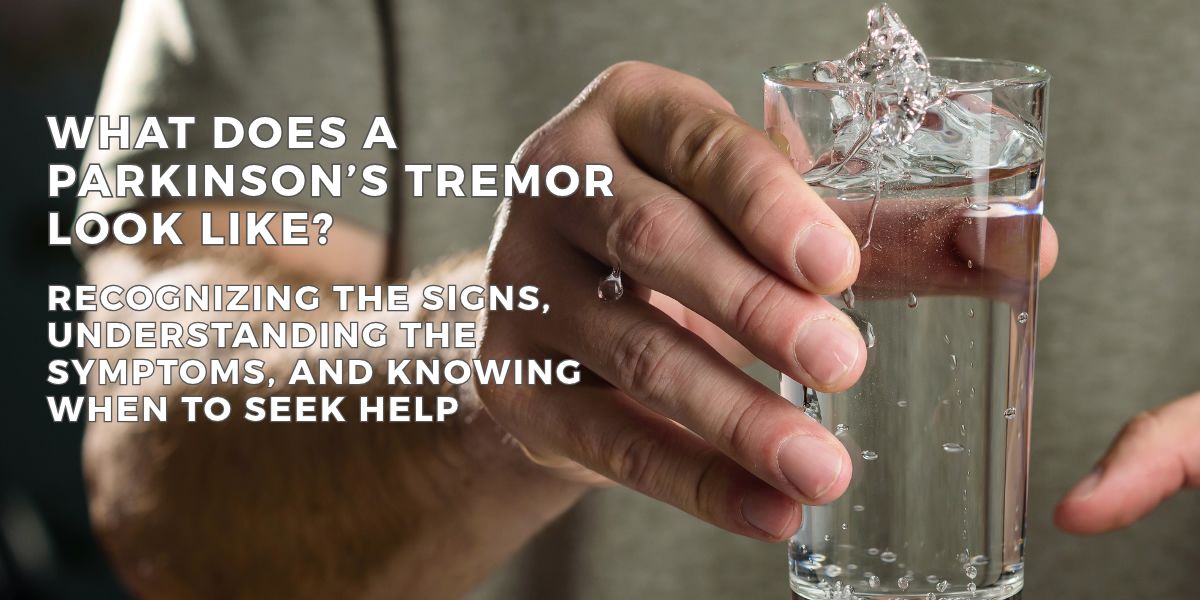
The first sign of Parkinson’s disease isn't always obvious. It might begin with a slight shaking in one hand, a trembling finger, or an unusual movement that seems to happen when the body is at rest. Because Parkinson’s tremors can look different from person to person, recognizing what to watch for can help individuals and families take an important first step toward understanding the condition.
But here's something important: Not every tremor is Parkinson’s, and not everyone with Parkinson’s develops a tremor. Understanding the differences can help you recognize potential warning signs without jumping to conclusions.
​What Does a Parkinson’s Tremor Look Like?
A Parkinson’s tremor is most commonly described as a rhythmic, involuntary shaking that occurs when a muscle is relaxed. It often begins in one hand or finger and may look like a thumb and index finger rolling something small between them. This movement is sometimes called a pill-rolling tremor.
Unlike some other types of tremors, a Parkinson’s resting tremor is typically more noticeable when the affected body part is relaxed and may decrease when the person intentionally moves it.
Tremors can affect one or both hands, arms, legs, feet, jaw, or chin. However, they often begin on one side of the body and may remain more pronounced on that side as the condition progresses.

What Are the Common Characteristics of a Parkinson’s Tremor?
Although symptoms vary, Parkinson’s tremors often have several recognizable characteristics:
  • Occurs at rest: Shaking is usually more noticeable when the hand or limb is relaxed.
  • Begins on one side: Tremors frequently start in one hand, arm, or leg.
  • Rhythmic movement: The shaking may appear repetitive, almost like a regular back-and-forth motion.
  • Pill-rolling appearance: The thumb and index finger may move against each other as if rolling a small object.
  • May decrease with movement: The tremor can become less noticeable when reaching for something or performing an intentional action.
  • May increase with stress: Anxiety, fatigue, and emotional stress can make tremors more noticeable.
A Parkinson’s tremor may also become more apparent when walking or when the affected hand is not actively being used.
Picture
What Does a Parkinson’s Tremor Look Like Compared to Other Tremors?
Not all shaking is caused by Parkinson’s disease. Several conditions can produce tremors, and understanding their differences is important.
Type of tremor
Typical appearance
Parkinson’s tremor
Often occurs when the body part is resting
Essential tremor
Usually more noticeable when using the hands, such as writing or holding a cup
Enhanced physiological tremor
Fine shaking that can occur with stress, caffeine, fatigue, or certain medications
Medication-related tremor
Shaking associated with certain prescription medications or medication effects
Essential tremor and Parkinson’s tremor are sometimes confused because both can affect the hands. However, their movement patterns and associated symptoms can differ.
A healthcare professional, often a neurologist or movement disorder specialist, can help determine the cause.

Can You Have Parkinson’s Without Having a Tremor?
Yes! This is one of the most important things to understand about Parkinson’s disease.
Not everyone with Parkinson’s experiences tremors. Some individuals develop other movement-related symptoms first, including:
  • Slowness of movement (bradykinesia).
  • Muscle stiffness or rigidity.
  • Balance and coordination difficulties.
  • Changes in walking patterns.
  • Reduced arm swing when walking.
Some people have a tremor-dominant form of Parkinson’s, while others experience a type characterized more by stiffness and slowness.
The absence of a tremor does not rule out Parkinson’s disease.
Picture
What Are the Early Warning Signs of Parkinson’s Disease?
Parkinson’s symptoms often develop gradually, making early changes easy to overlook.
In addition to tremors, possible early warning signs include:
  • Smaller handwriting (micrographia).
  • Reduced sense of smell.
  • Constipation.
  • Acting out dreams during sleep.
  • A softer or quieter speaking voice.
  • Reduced facial expression.
  • Stiffness in the shoulders or limbs.
  • Changes in posture or walking.
​Some of these symptoms can occur years before noticeable movement changes. However, having one or more of these symptoms does not automatically mean someone has Parkinson’s.

When Should You See a Doctor About a Tremor?
If you notice persistent shaking, particularly when your hands or limbs are relaxed, consider scheduling an appointment with your healthcare provider.
An evaluation may include a neurological examination, a review of symptoms and medications, and an assessment of movement, muscle stiffness, coordination, and balance.
There is currently no single blood test that confirms Parkinson’s disease. Diagnosis is primarily based on medical history and clinical examination, sometimes supported by additional testing.
Early evaluation can help identify the cause of symptoms and provide access to appropriate treatment, education, and support.
Picture
Questions people ask about Parkinson’s tremors
1. What does a Parkinson’s tremor look like?
It often looks like rhythmic shaking of the hand or fingers while at rest, sometimes resembling someone rolling a small object between their thumb and index finger.
2. Does Parkinson’s tremor happen all the time?
No. It can come and go and may become more noticeable during rest, fatigue, stress, or emotional changes.
3. Does Parkinson’s usually start with shaking hands?
A tremor is a common first motor symptom, but Parkinson’s can also begin with stiffness, slowness of movement, or other symptoms.
4. What is a pill-rolling tremor?
It is a repetitive movement of the thumb and index finger that resembles rolling a small pill between them.
5. How is a Parkinson’s tremor different from essential tremor?
Parkinson’s tremors are typically more noticeable at rest, while essential tremors are generally more noticeable during movement or when holding a position.
6. Can Parkinson’s affect the jaw or legs?
Yes. Tremors can affect the jaw, chin, legs, and feet in addition to the hands and arms.
7. Can you have Parkinson’s without shaking?
Yes. Many people with Parkinson’s do not experience tremors. Stiffness and slowness of movement can be more prominent.
8. What should I do if I notice a resting tremor?
Schedule a medical evaluation. A neurologist or movement disorder specialist can assess the tremor and look for other signs of Parkinson’s.
9. Does stress make Parkinson’s tremors worse?
Stress and strong emotions can temporarily increase the visibility or intensity of tremors.
10. Can a doctor diagnose Parkinson’s based on a tremor alone?
No. Diagnosis involves evaluating the person's medical history, movement symptoms, and neurological examination.

Conclusion: Recognizing the Signs Is the First Step
A Parkinson’s tremor may begin as a barely noticeable movement in one finger or hand, but it is important to remember that Parkinson’s affects everyone differently.
Recognizing potential symptoms, understanding the differences between tremor types, and seeking medical guidance when something changes can help individuals take a proactive approach to their health.
Most importantly, a Parkinson’s diagnosis does not mean giving up independence or quality of life. With education, appropriate care, exercise, and a strong support network, people living with Parkinson’s can continue to find ways to live well.
Picture
Why Support Matters
A diagnosis of any form of Parkinson’s can feel overwhelming. But with the right support and resources, individuals can maintain independence, quality of life, and emotional well-being.
For resources, referrals, and support in navigating Parkinson’s and related conditions, contact the Parkinson’s Association of Southwest Florida at www.paswfl.org or call 239-417-3465.
For over 25 years, PASWFL has provided free, high-quality services and programs to individuals and families touched by Parkinson’s disease in Southwest Florida. Their goal is simple: help people live well with PD, regardless of where they are in their journey.
Each week, PASWFL offers more than 25 free programs and support groups, including:
  • Wellness and fitness classes
  • Speech Exercise classes
  • Educational seminars
  • Support for care partners
  • Support groups

There are no fees to become a member, and PASWFL welcomes anyone touched by PD.

Take the First Step Toward Living Well
If you suspect early Parkinson’s or have been recently diagnosed, you don’t have to face it alone.
👉 Click here to sign up for the PASWFL newsletter
👉 Click here to become a member…it’s free and confidential
To learn more, visit www.paswfl.org and discover the power of support, education, and community.
0 Comments

Your comment will be posted after it is approved.


Leave a Reply.

    Author

    Write something about yourself. No need to be fancy, just an overview.

    Archives

    November 2026
    October 2026
    September 2026
    August 2026
    July 2026
    June 2026
    May 2026
    April 2026
    March 2026
    February 2026
    January 2026
    December 2025
    November 2025
    October 2025
    September 2025
    August 2025
    July 2025
    June 2025
    May 2025
    April 2025
    March 2025
    November 2024
    September 2024
    August 2022
    August 2021
    January 2021
    July 2020
    June 2020
    May 2020

    Categories

    All
    How-to-diagnose-parkinsons-disease
    How-to-manage-parkinsons-disease
    What Is Parkinson's Disease

    RSS Feed

Parkinson's Association of Southwest Florida 
2575 Northbrooke Plaza Drive
Suite#301, Naples, FL 34119
239-417-3465

[email protected]
​

Hours of Operation:
Monday - Thursday 9 am - 5 pm
Friday 9 am - 3 pm
Has the Parkinson's Association of Southwest Florida impacted your life? Don't forget to leave us a review on Facebook or on Google. 
Terms of Use and Privacy Policy

Become a Member

Picture
Text size